Free Guide: Unlock Calm with Foamy Slime – Sensory Play Activities for Autistic Kids
Estimated Read Time: 7 min Difficulty Level: BeginnerTable of Contents
Introduction to Foamy Slime & Sensory Play
For many autistic children, the world can be an overwhelming place. Sensory input, which most people process unconsciously, can feel amplified, chaotic, or even painful. This often leads to feelings of anxiety, meltdowns, or withdrawal. Sensory play, however, provides a safe and engaging avenue for children to explore and regulate their sensory experiences on their own terms. Among the myriad of sensory tools available, foamy slime stands out as a versatile and incredibly calming option.
Foamy slime, with its light, airy texture and satisfying squish, offers a unique blend of tactile and visual stimulation without being sticky or overly messy like some other sensory materials. It's a wonderful medium for children who seek deep pressure, crave visual tracking, or need a repetitive, predictable sensory experience to help self-regulate. This guide will walk you through the incredible benefits of incorporating foamy slime into your autistic child's routine, provide simple recipes for making your own, and suggest a variety of engaging activities designed to foster calm, creativity, and development.
Why Foamy Slime? Benefits for Autistic Children
Foamy slime isn't just a fun toy; it's a powerful therapeutic tool for autistic children. Its distinct properties cater to various sensory needs and developmental goals:
- Tactile Input & Regulation: The unique texture of foamy slime—soft, airy, yet dense enough to provide resistance—offers diverse tactile input. This can be deeply satisfying for children who seek tactile stimulation or calming for those who need to organize their sensory system. It allows for exploration without the common aversion to stickiness.
- Fine Motor Skill Development: Squeezing, pulling, stretching, and shaping foamy slime naturally strengthens hand muscles, improves dexterity, and refines pincer grasp. These are crucial skills for daily tasks like writing, buttoning clothes, and self-feeding.
- Stress Reduction & Calming: The rhythmic, repetitive motions involved in playing with slime can be incredibly grounding. For children experiencing anxiety or sensory overload, engaging with foamy slime can act as a natural stress reliever, helping to divert focus and promote a sense of calm.
- Enhanced Focus & Attention: The captivating visual and tactile qualities of foamy slime can help some children sustain attention for longer periods. It provides a structured activity that can be less demanding than direct social interaction, allowing for focused engagement.
- Creative Expression & Imaginative Play: While often seen as a simple sensory material, foamy slime can be transformed. Children can use it to build structures, create landscapes, or represent abstract ideas, fostering imaginative play and communication in a low-pressure environment.
- Safe Exploration: Unlike some other materials, foamy slime is generally non-toxic and easy to clean up, making it a safe and parent-approved option for uninhibited play and exploration.
Understanding these benefits helps parents and caregivers intentionally integrate foamy slime into routines, maximizing its potential as a supportive tool.
Making Your Own Calming Foamy Slime
Creating foamy slime at home is simple and offers an opportunity to customize its texture and scent, making it even more appealing to your child. Here’s a basic, safe recipe:
Basic Foamy Slime Recipe:
Ingredients:
- 1/2 cup PVA glue (white school glue)
- 1/4 cup shaving cream (not gel)
- 1/4 cup foaming hand soap
- 1/4 teaspoon baking soda
- 1 tablespoon saline solution (must contain sodium borate and boric acid)
- Optional: Food coloring, essential oils (e.g., lavender for calm, peppermint for focus – use sparingly)
Instructions:
- In a bowl, combine the PVA glue, shaving cream, and foaming hand soap. Mix gently until just combined. Overmixing at this stage can reduce foaminess.
- Stir in the baking soda until fully dissolved.
- Add the saline solution, one tablespoon at a time. Mix vigorously. You'll notice the mixture starting to pull away from the sides of the bowl and become less sticky.
- Once the slime begins to form, take it out of the bowl and knead it with your hands. It might be sticky at first, but keep kneading. The warmth from your hands and the continued mixing will activate the saline solution, making it less sticky and more elastic.
- If it's still too sticky after a few minutes of kneading, add a tiny bit more saline solution (about 1/2 teaspoon at a time) and continue kneading until it reaches your desired consistency. Be careful not to add too much, or the slime will become stiff and breakable.
- Store your foamy slime in an airtight container at room temperature to keep it fresh for weeks.
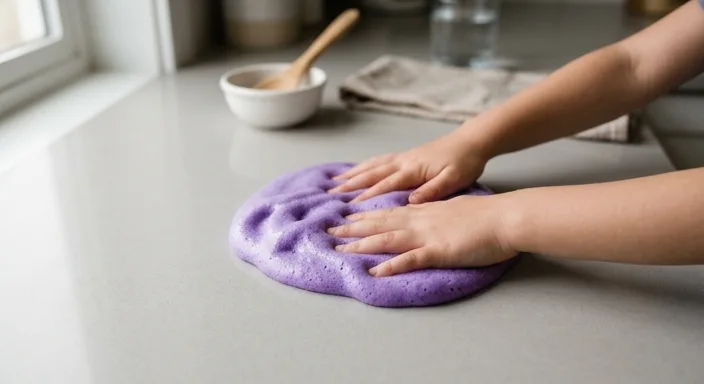
Always supervise children during slime play, especially those who might put non-food items in their mouths. Ensure hands are washed before and after playing.
Engaging Sensory Play Activities with Foamy Slime
Once you have your foamy slime ready, the possibilities for play are endless. Here are some structured and open-ended activities:
- Simple Squish & Stretch: The most basic yet highly effective activity. Allow your child to simply squish the slime between their fingers, pull it apart, and stretch it. This provides calming proprioceptive input and helps with sensory regulation.
- Hidden Treasures: Bury small, non-choking hazard objects (e.g., plastic animals, beads, smooth pebbles, puzzle pieces) within the slime and have your child dig them out. This adds a problem-solving element and encourages fine motor precision.
- Slime Molding & Shaping: Provide cookie cutters, plastic knives, or even LEGO bricks for children to press into the slime, creating shapes and patterns. This promotes creativity and motor planning.
- Foamy Slime Avalanche: Place a large ball of foamy slime on a tray or table and let your child slowly pull it apart, watching the strands stretch and break. The visual and tactile experience can be very soothing.
- Sensory Bin Addition: Incorporate foamy slime into a larger sensory bin alongside other items like dry pasta, rice, or small toys. This allows for diverse textures and encourages imaginative play scenarios.
- Tabletop Art: Spread a thin layer of slime on a clean table surface. Your child can then use their fingers or small tools to draw or make patterns in the slime.
Remember to observe your child's cues. If they seem overstimulated or disinterested, gently redirect or end the activity. The goal is positive engagement.
Tips for a Successful Sensory Play Session
To ensure foamy slime play is a positive and beneficial experience, consider these tips:
- Create a Calm Environment: Choose a quiet, low-distraction space. Dim lighting or soft music can enhance the calming effect.
- Set Boundaries & Expectations: Clearly communicate where the slime can be played with (e.g., on a tray, at a table) and what the cleanup routine will be. Visual schedules can be helpful.
- Respect Sensory Sensitivities: Some children may be sensitive to certain colors, scents, or even the sound of slime. Start plain and introduce variations slowly. Have wipes or a wet cloth handy for easy cleanup.
- Follow Your Child's Lead: Allow for child-led exploration. There’s no right or wrong way to play with slime. If they prefer to just watch it stretch, that’s perfectly fine.
- Keep it Simple: You don't need elaborate setups. Sometimes, just the slime itself is enough.
- Incorporate into Routine: Schedule sensory play into the daily routine, perhaps before a challenging task or as a wind-down activity before bed.
Troubleshooting Common Sensory Play Challenges
While foamy slime is generally well-received, you might encounter some challenges. Here's how to address them:
- Reluctance to Touch: If your child is hesitant, start by demonstrating. Use tools (spoons, spatulas) instead of hands, or place the slime in a zip-top bag for a no-mess, indirect tactile experience. Gradually introduce more direct contact as they become comfortable.
- Overstimulation: Look for signs of overstimulation (e.g., aversion, agitation, withdrawal). Reduce the amount of slime, remove any strong scents or bright colors, or stop the activity and try again later. Focus on single sensory input at a time.
- Messiness Concerns: Play on a designated washable surface (e.g., plastic placemat, tray). Have a damp cloth or wipes ready. Remind your child of the boundaries and involve them in the cleanup process to foster responsibility.
- Loss of Interest: If your child quickly loses interest, try introducing new elements: different colors, small toys to embed, or suggesting a new way to interact (e.g., "Can you make a snake with the slime?"). Keep sessions short and engaging.
- Slime Becoming Stiff/Sticky: If your slime gets too stiff, try kneading in a tiny amount of lotion or a few drops of warm water. If it's too sticky, knead in a tiny bit more saline solution. Always store in an airtight container.
Patience and flexibility are key. Every child is unique, and what works for one may not work for another. Experiment and find what resonates best with your child's individual sensory profile.
Frequently Asked Questions (FAQ)
Is foamy slime safe for all autistic children?
While foamy slime is generally safe and non-toxic, supervision is always recommended, especially for children who tend to put non-food items in their mouths. Ensure ingredients are child-safe and always wash hands after play. If your child has specific allergies, check ingredient labels carefully.
How often should we engage in foamy slime play?
The frequency depends on your child's interest and sensory needs. Some children might benefit from daily short sessions (10-15 minutes), while others prefer less frequent but longer playtimes. Observe your child's cues and integrate it naturally into their routine.
Can I add scents to foamy slime?
Yes, you can add a few drops of essential oils for aromatherapy benefits (e.g., lavender for relaxation, orange for uplifting). However, be mindful of strong scents, as some autistic children are sensitive to smells. Always start with a very small amount and observe your child's reaction.
What if my child doesn't like the texture of slime?
Sensory preferences vary greatly. If foamy slime isn't a hit, don't force it. Try other sensory materials like water beads, playdough, sand, or rice bins. You can also introduce slime indirectly by placing it in a bag or using tools for initial interaction.
How do I clean up foamy slime messes?
Foamy slime is relatively easy to clean. Most can be picked up off surfaces. For small residues, a damp cloth or a dab of vinegar can work. For clothing, let it dry completely, then pick or scrape it off. For stubborn spots, a little rubbing alcohol might help, but test on an inconspicuous area first.